

Born and raised on the outskirts of Brisbane, QLD, Australia to an ex professional rugby league player and a gymnast/model, a career in acting was a different choice for a young Mitchell Bourke. After many hours of extra curricular training throughout school and multiple leads in school musicals, the arts were a definite calling for Mitchell. Though his high level achievements in sport played a part in his growth, his interest in art, human behaviour and psychology led him to continue his arts journey by studying a Bachelor of Fine Arts in Acting at the Queensland University of Technology an audition based program that takes part for 3 years.*
Now with a string of film, TV, and stage performances building out his resume, including the Queensland Theatre’s First Casualty and the romance series A Royal in Paradise, Nick L’Barrow sat down for an extensive conversation with Mitchell about taking on his most intricate and challenging role to date – Ted Bundy in the new crime thriller Green River Killer.
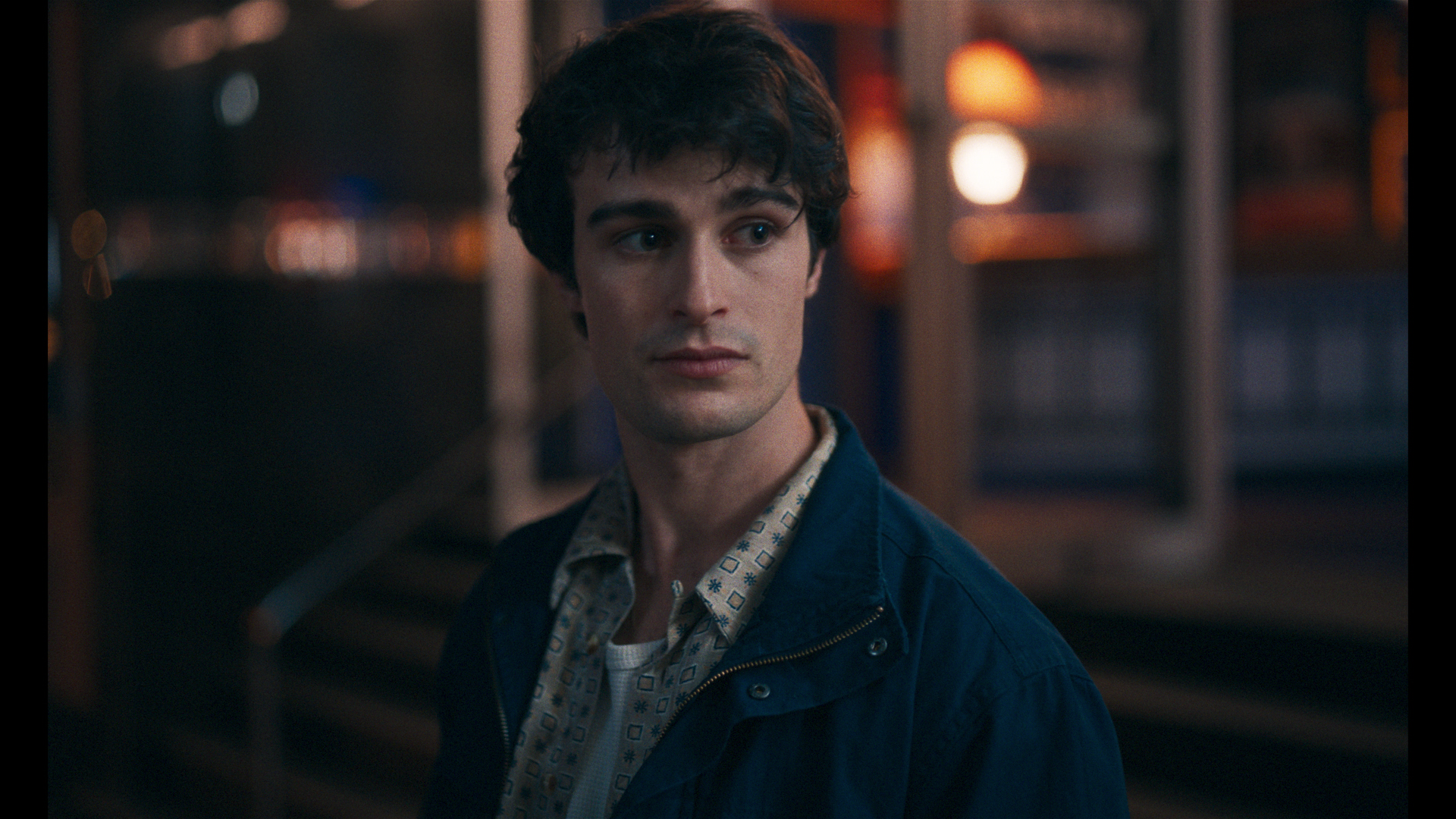
Our conversation casually began with how Mitchell is on the precipice of his 30s, and the lessons he has learnt acting throughout his 20s were so valuable…
Mitchell Bourke: I find it’s a real detriment to the work if you’re not growing from lived experiences. You’re just chasing the next thing. And the grind is great, and all your skills are there to learn. But everyday is an opportunity to learn something new, and then bring that to the following project or the next thing. The way I think about it is that I’m not trying to stop and smell the roses a bit more. I’m hitting a new decade shortly, so my perspective on things is in a real place right now [laughs]. I look back at my 20s and I did all of this work, and I feel like I didn’t take all of it in enough.
Nick: I know what you mean. I’m 31, and I’m currently in that same phase. The perspective shift happened as soon as I turned 30. But it also makes me so glad that I’m doing these interviews and junkets now, because it would have felt so different back when I was 21. I feel like I bring way more to it at 30 because of my life experience.
MB: Yeah, you bring so much more wealth and knowledge. What’s bizarre is that we’re witnessing 21-year-olds get so much more “status” – because these days, what is status? And I’m not putting down 21-year-olds, but I feel like they are trying to scrape together all of this knowledge that they feel like they’re supposed to have, but it’s not lived. They’ve only been an adult for 3 years, right? You only know 3 years worth of shit. That’s not a long time.
Nick: I think the accumulation of knowledge and experience is so important. But that’s only something I learnt in the last few years. I don’t think it’s putting down 20 year olds at all. I interviewed Curry Barker earlier this year, and I was thinking throughout the whole chat that I was nothing like how he presented himself when I was 25. Kane Parsons directed one of the coolest horror films this year at 20. Maybe we need to give that generation more credit. I don’t know. But my experience points to the idea that life experience is so important to the work we do.
MB: Maybe you’re right! I think it is different for us and what opportunities were accessible at 25. The idea of having to grow up quicker is scary to me now. When I was a teenager, all I wanted to be was taller, stronger. Grow a beard quicker. Now all that shit’s annoying! I don’t want to shave every day! I don’t want to grow up anymore. So I’m trying to find ways to access the kid who climbed trees and created all of these characters when he was 12. I don’t want to lose that. Especially with the work that I do, I need to access that childlike instinct, and instinct is a massive part of what we do.
Nick: Is that an attractive part of the work for you? To have a reason to still be able to tap into that type of instinct?
MB: Definitely. Definitely. We’re blessed as actors that we can live so many stories and emotions in one project that some people may not get to live in their entire life. I get to try and access that for six months, and do it justice, then move on to something new that’s going to teach me something different. I feel super blessed to do it, but it’s also a massive part of why I love to do it. When I’m on set, or even the lead up and the researching, I just feel alive. From being a kid on stage, or my school choir or musicals, to being on international film sets with all of these crews, I still love it. And I’m still learning. That’s something I know I’m not going to lose, even after I turn 30 [laughs]. I get to learn every time a character is presented to me.

Nick: I’d love to ask more about the stage work you did, because I’m always fascinated about how the skills can transfer from stage to screen. When you’re on stage, I feel like you always have to be on, because you’re on show even when you’re not the focus of the moment. Is that something you take with you into movies as well?
MB: Oh, big time. It’s a great question because when I got my first main stage production at like 24 with the Queensland Theatre Company, I had an amazing mentor. He was necessarily a teacher by trade, he was an actor who kind of came into teaching at the school I was at. But he would yell out and walk around us while we were rehearsing, or laugh at the jokes that were said, or whisper directions in our ear. And I found that kind of teaching kept us really active and made us really focus on what was happening in the moment. That really taught me that even if you’re off stage, you have to stay active. Things can go wrong on stage, and you might have to run in earlier than your cue, or somehow come and save a moment. Funnily enough, I also worked with some great comedic clown actors who had been doing it for like 15 years, and their whole thing is to try and steal a scene because they’re making people laugh, right? People consider it egotistical to do that, but if it’s serving or adding to the production, then I am 100% for it. So, I definitely try to take that with me into film. Just because the person you’re acting against is in their close up doesn’t mean you should not be present. I think it makes for a much better production and outcome if you’re giving it your all for every set up.
Nick: Something else that fascinates me is the correlations between athletes and actors. I know you were a gymnast and played a bit of footy growing up. Were the disciplines you were able to take from sports that have been transferable to acting?
MB: 100%. The research and studying, learning the lines, those disciplines are things I was taught through sport. Gymnastics is a very disciplined sport, and I think doing that early on gave me this… I call it the Patrick Bateman mentality [laughs]. Just this ability to lock in on something, shut out all the noise, and really deep dive into a role, no matter how big or small. But then something like footy also helped me grow my instincts because you have to be able to relinquish some control to the tension of sports. When it comes to acting, you’ve got to release that tension, let go of some of that control.
Nick: The research is obviously very important to you and to the work. When you tackle a character like Ted Bundy – a character who people have done interpretations of before – what is your process in balancing being an authentic version of him, but also a different version of him, but also the version of him the script requires him to be?
MB: Yeah, I don’t even want to just mimic someone who has done the role before. There’s a real fine line of how much research I should do. I kind of need to pull the guy apart on who he was, why he did what he did, finding his ticks, and then find where I would sit within those elements. The one thing for me was how his accent actually had many different nuances to it. He was born in the northwest, but moved and had this drawl on certain words. He was also a Californian. He was this amalgamation of so many accents. But the discipline really came in with not going and watching other people’s interpretations of Ted Bundy. I didn’t want to taint my research, but I wanted to do myself justice and play him the way I saw him. But, Nick, man, I had imposter syndrome. The greatest thing that happened in my research though was I found a book that talked about how when Ted walked into a room, it was his room. It was his space. And that’s not how I operate, so that was a great thing to tackle and turned into a real learned experience to dive into something that’s not really normal to me.
Nick: And what was the process of taking that version of Ted Bundy you had created and melded him with the Ted Bundy that we find in Green River Killer?
MB: I contacted the writer straight away and wanted to see where he saw Ted sitting within this story. And they had picked a very specific moment in the story where the Green River Killer is getting quite famous and notorious, and Ted just couldn’t handle it. He couldn’t handle that someone was getting bigger than him. Talk about narcissism, man! His ego from death row was insane! But, he saw it as an opportunity to plead his case again to get off of death row. And what the writer and director said to me was, “Ted is the star of this movie, in his head”. They wanted me to treat it that way. You need to take up as much time and space in this scene as you can. You don’t want these investigators to leave. And so it was about charming their pants off in the way he would. Flaring his ego. But it’s his ego that got the best of him because he ended up helping them put pieces of the case together about how a serial killer would operate. It ended up putting a stop to certain killings.
Nick: Earlier we spoke about how it’s fun to tap into the childlike instinct as an actor. On the other side of the coin, is there an excitement about tapping into the taboo side of playing a serial killer, and letting loose with evil inhibitions?
MB: Because I don’t operate on that level, it was interesting to try and figure out how some like that does operate. It was like trying to pick up a new skill, and it took some time to learn it. But gosh, once I got the hang of it, there is this sort of joy to it. Playing some like Ted, who has a lot of baggage to him– it’s kind of like growing up watching certain movies. Why do I resonate with certain movies? Sometimes there are these characters that seem like rockstars. They have this way about them. They operate on a level of intellect that I don’t ever know if I could. And Ted was kind of like that. He had this rockstar quality. So finding a way to inhabit that into my brain and my body was so fun. How does he look at someone? What is the physicality like? All of these little idiosyncrasies that man had about him really played into the fact that this guy is not okay. But, he was the hero of his story. And I had to kind of fall in love with those aspects of him. Funnily enough, all of these movies about him, or even how we’re talking about him now, I reckon he’d be smiling in his grave.
Nick: How much does your process change from portraying Ted Bundy to a character like Prince Alexander, who is on the complete opposite end of the spectrum in terms of people?
MB: You know what’s funny – and I’ll have to shout my mum and dad out here, because they’ve been so supportive of me since I was a kid. My dad is a big movie buff. He showed me The Godfather, Goodfellas, 2001: A Space Odyssey, Ferris Bueller’s Day Off. And when I got this role of Ted Bundy, and I was telling him about that imposter syndrome I was struggling with, he told me about how Jim Caviezel had to completely empty himself to play Jesus in The Passion of the Christ. Now, I am definitely not comparing Jesus to Ted Bundy [laughs], but thinking about the process, my dad said to me, “You just got to completely empty yourself”. Now someone saying that to you and actually doing it is a big leap. Comparatively to Prince Alexander, I needed to heighten what I thought about romance, and fun, and wanting to make an impact in the world. I had to go to the other end of the extremities of that. I’ve played Alexander three times now, and I never wanted to become comfortable playing him. I hold myself in high regard for the work that I want to put into the character and the standards I need to do that. So while the characters were different in behaviour, finding the extremities of those behaviours were still the same.

Thank you so much to Mitchell for his time. His upcoming project, Green River Killer, will release in late 2026, and A Royal Wedding: A Royal in Paradise III is out in the US now.
*The opening biography is courtesy of IMDb.
